


Who Rescues the Rescuers? The Benefits of First Responder Wellness Programs

Supporting Our Everyday Heroes: Why First Responder Wellness Matters
When you think about the brave men and women who run toward danger while the rest of us run the other way, it’s easy to admire their courage.
But have you ever stopped to wonder—who takes care of them?

That’s where wellness programs for first responders come in. These programs support the mental, emotional, and physical health of our everyday heroes—and trust me, they’re more important than you might think.
Let’s dive into why wellness programs matter, how they actually work, and the ripple effect they create for first responders, their families, and entire communities.
Why Wellness Programs Are Essential

First responders face unique challenges every day: witnessing trauma, working long, irregular hours, and handling high-stress situations most of us can’t imagine. Over time, this takes a serious toll on mental and physical health.
Wellness programs are designed to meet these challenges head-on. They provide a safe space to decompress, learn appropriate coping strategies to build resilience, and strengthen overall well-being. Think of them as a toolkit that helps responders handle the toughest days with a little more ease—and a lot less burnout.
Here’s why these programs are a game-changer:
Mental health support: Confidential therapy and counseling to process traumatic events.
Physical wellness: Fitness and nutritional guidance keep their bodies strong and ready.
Peer connection: Support groups: sharing experiences with others who understand creates a sense of belonging..
Stress reduction: Tools like mindfulness, relaxation exercises, and coping strategies.
When responders feel supported, they perform better, stay healthier, and are more likely to remain in their careers long term.

What Wellness Programs Look Like in Real Life
You might be wondering, “Okay, but what does a wellness program actually look like?” Spoiler: it’s not about handing out pamphlets or telling people to “just relax.” These programs are thoughtfully designed to meet first responders where they are.
Programs are designed to be practical, accessible, and built into everyday life. Examples include:
Regular mental health check-ins: Confidential sessions with trained counselors.
Fitness routines: Workouts designed for job-specific demands.
Nutrition advice: Simple meal plans that fuel long shifts without complicated recipes.
Peer support groups: Safe spaces to share stories and coping strategies with others who “get it.”
Workshops on resilience: Training on bouncing back from tough calls.
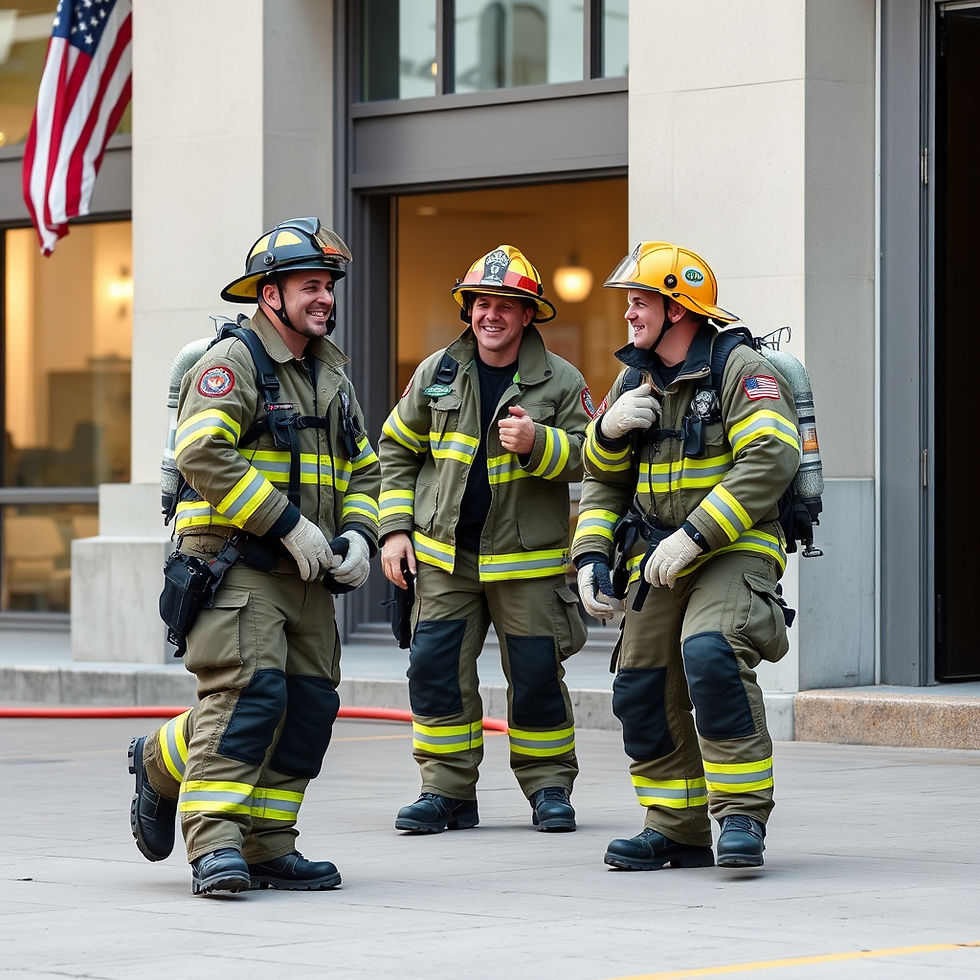
And yes, humor often makes its way in—because sometimes laughter really is the best medicine.
The Ripple Effect: Why It Benefits Us All
When first responders thrive, everyone benefits. It’s not just about reducing burnout; it’s about creating stronger families, safer communities, and healthier workplaces.

Think about it:
A firefighter who is mentally and physically healthy can better protect their community.
A police officer who feels supported is more likely to make thoughtful decisions under pressure.
An EMT who manages stress well can provide compassionate care even in the most chaotic moments.
Here’s the ripple effect in action:
Stronger families: First responders who receive support bring stability and calm home.
Better teamwork: Healthy first responders communicate and collaborate more effectively.
Improved community safety: A well-supported first responder makes clearer, more thoughtful decisions under pressure.
Reduced turnover: Mental health support helps keep experienced first responders remain on the job longer.
It’s like planting one seed of care that grows into an entire forest of resilience for everyone involved.
Taking the First Step Toward Wellness
If you—or someone you know—are a first responder, stepping into a wellness program may feel big, but it’s absolutely worth it.
Here are a few simple ways to start:
Reach out: Contact your department’s wellness coordinator or look for local programs.
Add small habits: a mindful pause, a short walk, or a five-minute stretch into your day.
Connect with & lean on peers: Talk openly with trusted colleagues.
Seek professional support: Counseling is a sign of strength, not weakness.
Stay consistent: Wellness is a journey, not a quick fix.
Remember: taking care of yourself isn’t selfish. It’s necessary. You deserve support, and so do the people who rely on you. Your health and resilience impact not only you, but everyone who counts on you.
Final Thoughts
Wellness programs for first responders aren’t a luxury—they’re a lifeline. They offer balance, strength, and hope to those who give so much to protect us and keep us safe. By embracing and investing in these programs, we ensure that the heroes among us have the care and support they deserve.

Because even heroes deserve support in their corner.
_________________________________________________________________________________________.

If you want to explore more about how to support yourself or a loved one in this journey, check out our first responder wellness resources.
Call to Action:
Change starts with you. One conversation. One shift. One team at a time.
As we close this series, remember: mental health is not a weakness — it’s a vital component of operational readiness and long-term resilience. And as a first responder, you deserve to be as strong mentally as you are physically.
Thank you for joining me in this series. Let’s keep the conversation going. Together, we can build a culture where every first responder feels safe to seek support and thrives beyond the badge.
You Deserve a Full Toolbox
No one expects first responders to face fires, fatalities, and fear alone. So why face mental stress alone? Using coping tools doesn’t make you weak. It makes you prepared.
Call to Action:
Try just one of the tools above today — a breath, a buddy check-in, a moment of silence after a call.
Then ask a teammate: “What helps you get through the tough shifts?”
Click below for additional specific resources for First Responders:
Click below for additional coping skill ideas:
For a printable version of self-care ideas:
A free consultation with a Therapist in Pleasant Hill / Walnut Creek, CA.
Are you looking for a compassionate and effective therapist in the Pleasant Hill / Walnut Creek, CA area to overcome depression? I’m not the therapist that will ask you how you feel every day. Instead, we work together as a team to make concrete improvements in reducing your symptoms and enjoying life again.
As an experienced practitioner with 15 years of experience and a background in Applied Behavior Analysis, I often implement data tracking, ensuring clinical progression & increasing your awareness in your growth. I specialize in providing supportive therapy with a touch of humor. I am a Certified Clinical Trauma Professional, trained in EMDR, and evidenced-based techniques including CBT & DBT to help facilitate your treatment goals with a solution-focused approach.
Specialties include depression, anxiety, autism, trauma, ABA, and IEP consultations.
Like what we talked about today? Check out related articles:
Click below for additional specific resources for First Responders:
_________________________________________________________________________________________
STATISTICS:
FROM 2017 – 2021:
511 OFFICERS WERE KILLED IN THE LINE OF DUTY
756 OFFICERS DIED BY SUICIDE
From 2017 to 2021, the FBI’s Law Enforcement Officers Killed and Assaulted (LEOKA) program reported 511 officers were killed in the line of duty (270 feloniously and 241 accidentally). During the same 5-year span, First H.E.L.P. — a nonprofit that started collecting law enforcement suicide data in 2016 — reported 756 officer suicides. That number is nearly three times higher than that of feloniously killed officers. This data suggests that officers are more likely to kill themselves than to be killed in the line of duty. Suicide in the law enforcement community has become an epidemic, and these brave men and women need help. As a result, in May 2020, Congress passed the Law Enforcement Suicide Data Collection (LESDC) Act to generate an understanding of suicide in law enforcement and help prevent future deaths.
STUDIES SHOW:
30% of First Responders Develop Behavioral Health Conditions: Approximately 30% of first responders develop behavioral health conditions, such as depression and post-traumatic stress disorder (PTSD), compared to 20% in the general population. This disparity underscores the heightened mental health risks associated with emergency response professions.
In 2020, 116 police officers died by suicide while 113 died in the line of duty (Stanton, 2022). In 2021, that number rose to 150 officers dying by suicide (Leone, 2022). Law enforcement officers have a 54% increase in suicide risk when compared to the civilian population (McAward, 2022). Police Officer Suicide and Suicide Prevention
Suicide rates among EMTs and firefighters are significantly higher than average. Emergency Medical Services (EMS) providers, including EMTs and firefighters, experience significantly higher proportionate mortality ratios for suicide than the general population. For instance, EMS providers have been shown to have suicide rates ranging from 17.2 to 30.5 per 100,000, compared to the general population's rate of 13.0 per 100,000. Prevalence of Suicide Risk Factors among Emergency Medical Services Providers in Utah
Additionally, a study found that firefighters and EMTs had significantly higher proportionate mortality ratios for suicide compared to the general U.S. working population.
Police officers are more likely to die by suicide than in the line of duty. For example, in 2017, 140 police officers died by suicide, while 129 died in the line of duty. This trend continued in subsequent years, highlighting the persistent mental health challenges within the profession. Furthermore, police officers have a 54% increased risk of suicide compared to the civilian population. Boston University
These numbers are staggering — but they only scratch the surface. Many cases go unreported because of the deep stigma within the profession.
RESOURCES:
Mental Disorders and Mental Health Promotion In Police Officers - PMC
5 Reasons the Mental Health Of Police Officers Needs To Be A Priority | Walden University
LAW ENFORCEMENT MENTAL HEALTH AND WELLNESS ACT (LEMHWA) PROGRAM | COPS OFFICE
New NAMI Cope Mental Health Program To Support California Police Officers - NAMI California
Prevalence Of Mental Illness and Mental Health Care Use Among Police Officers - PMC


Comments